
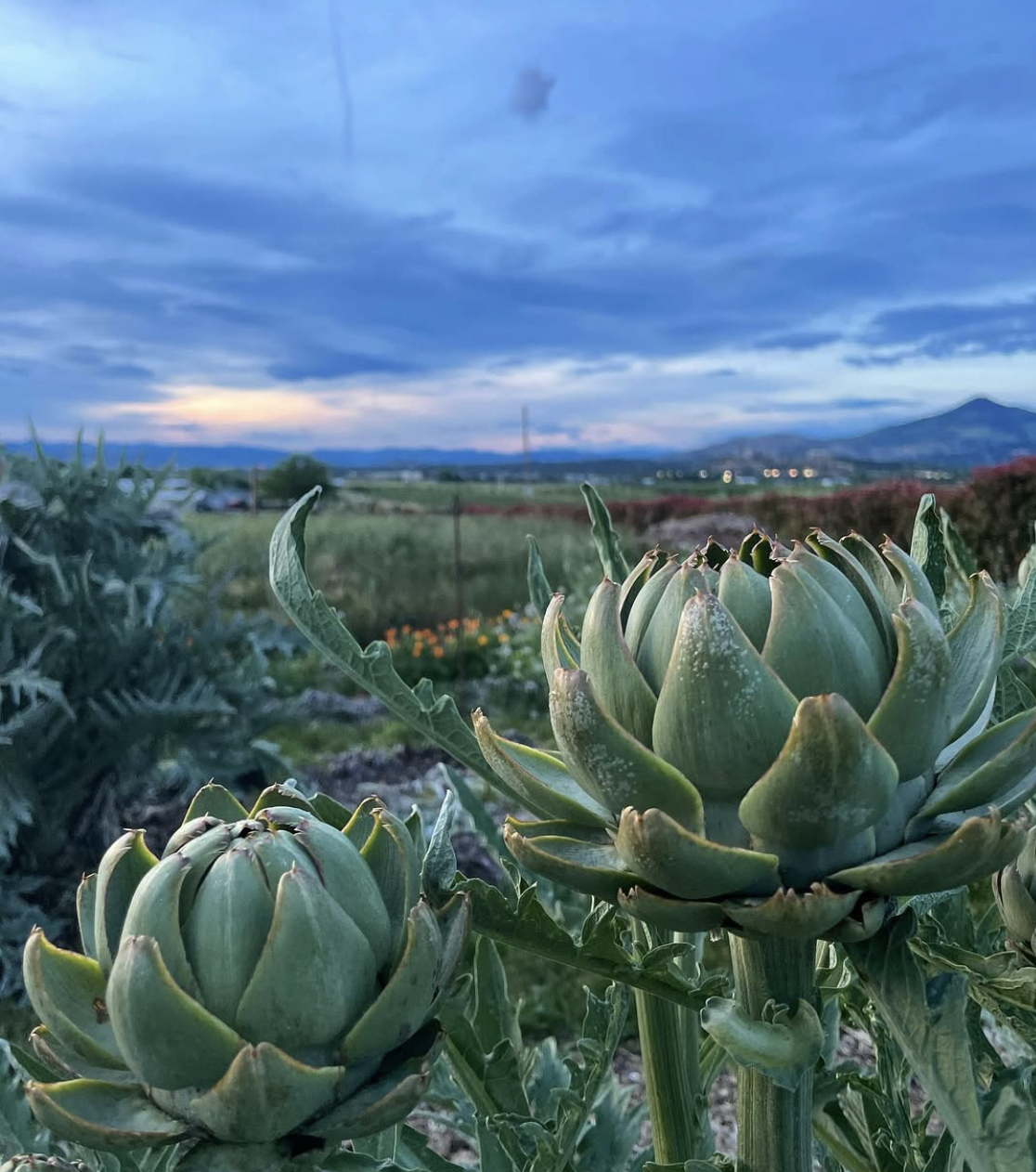
Garden Girl Farm: Your premier food security education spot in Southern Oregon.
Permaculture is a way of designing garden spaces that function more like healthy natural ecosystems. It helps people grow food, conserve resources, and build regenerative communities with less waste and more resilience.
Regenerative farming is a way of growing food that rebuilds soil, supports biodiversity, and strengthens the long-term health of the land.
A food forest is a layered garden of edible perennial plants designed to mimic a forest ecosystem and produce food, habitat, and long-term sustainability and abundance.
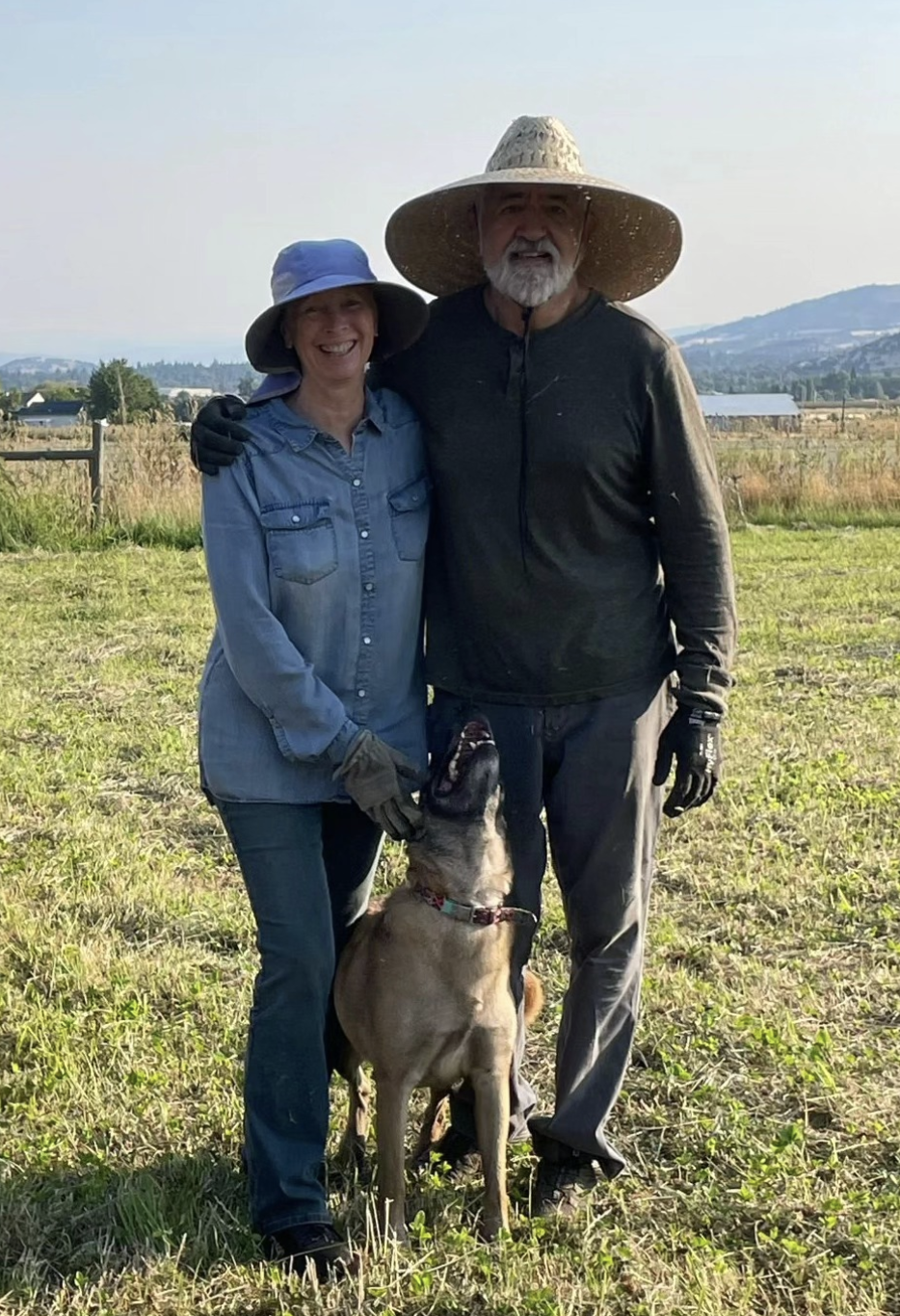
Teamwork
Terry and James have owned and stewarded 5 acres in Southern Oregon and have been stewarding the land since 2015. Within a few short years of rehabilitating the soils with permaculture principles, the land has flourished, producing thousands of pounds of produce, herbs, tinctures, syrups, and more. Garden Girl Farm has become a haven for native bees, worms, friends, family, animals, and community. At the farm, there is a lot of bartering with fellow local farmers. We barter hay for milk and meat, firewood for plums, elderberry for home-baked goods, and more!
Terry makes the magic; James does the heavy lifting. All are welcome at the farm, and they can’t wait to meet you!
What do we grow at Garden Girl Farm?
Everything! See for yourself!
Welcome to 5-Acres of Glorious Soil
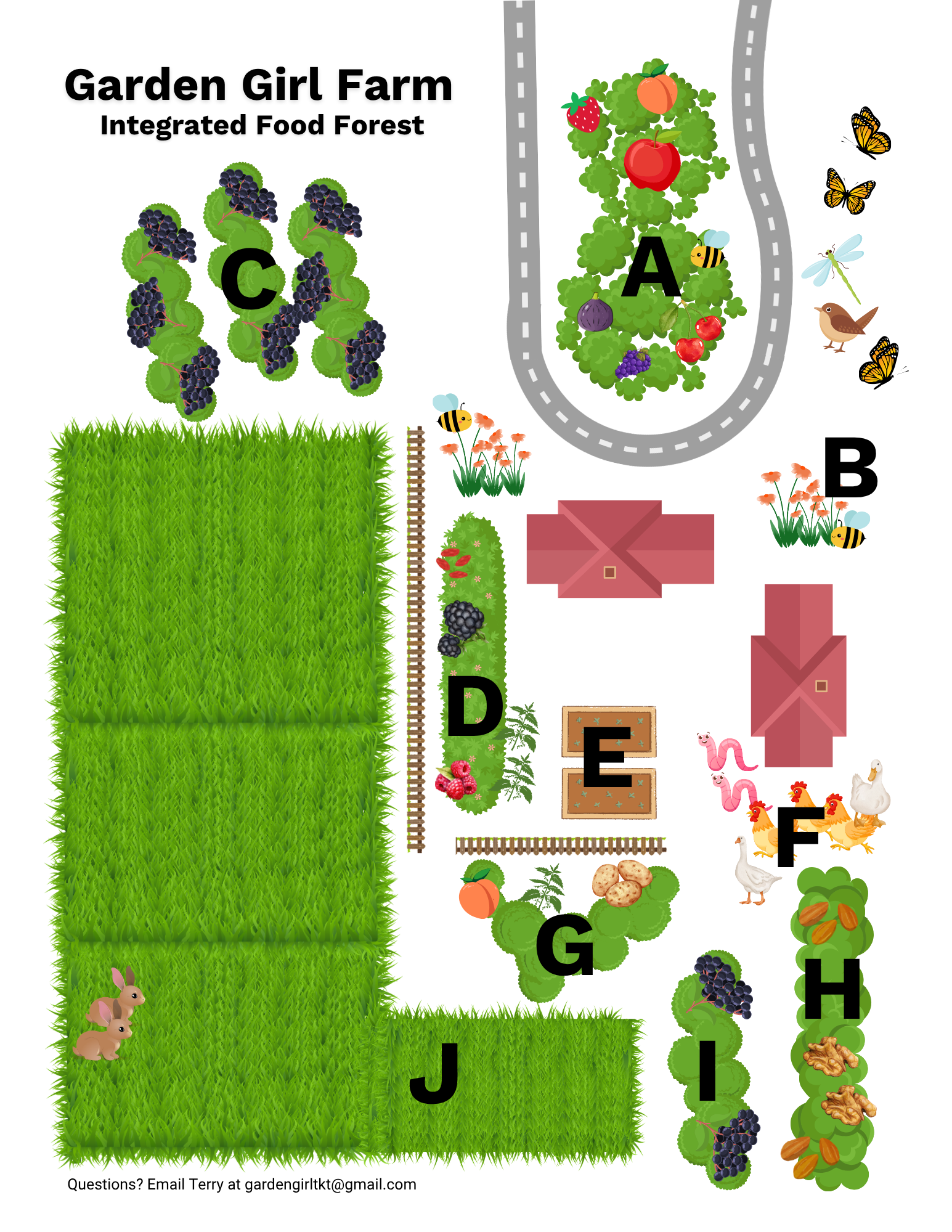
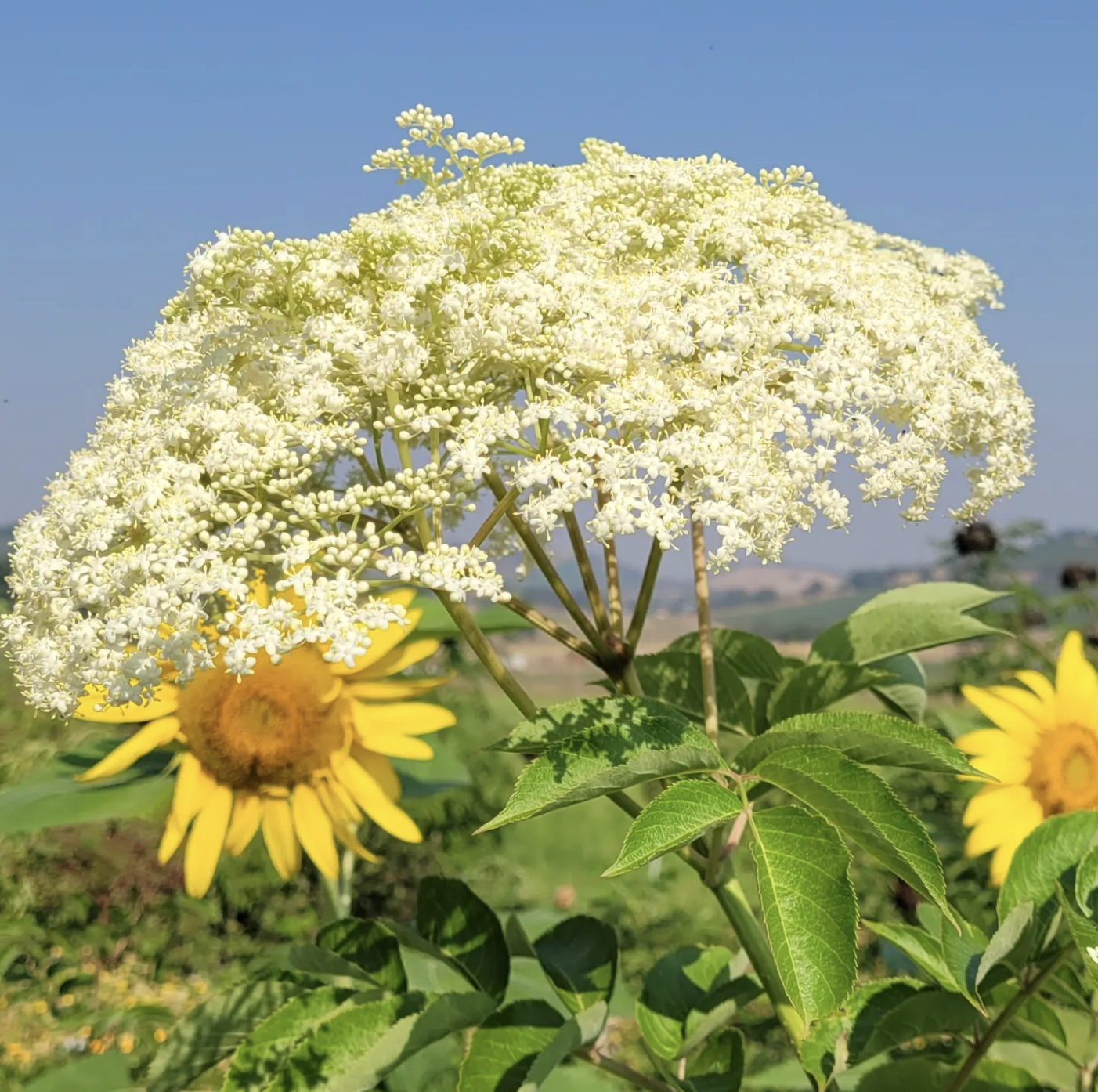
A - Front Orchard: Strawberries, Peaches, Apples, Cherries, Onions, Figs, Calendula, Grapes, Plums, Roses, Chives, Garlic, Echinacea, Rudbeckia, Medlar, Shasta Daisy, Black Elderberry, Aronia, & Artichokes.
B - Pollinator Garden: Calendula, Rosemary, Poppies, Mugwort, Lamb’s Ears, Sage, Milkweed, Showy, Lavender, Madrone & Manzanita.
C - Medicinal & Superfood Orchard: American Black Elderberry, Hops, Peonies, Goji Berry, Aronia Berry, Grapes, Blackberries, Artichokes, Fennel, Lavender, Squash, Tomatoes, Daikon Radish, Yarrow, Zucchini, Lemon Balm, Asparagus, Black Seed (Love-in-a-mist), Borage, Goldenrod & Calendula.
D - Fruit & Berry Guild: Blackberries, Elderberries, Comfrey, Strawberries, Currants, Raspberries, Tay Berry, Thimble Berry, Grapes, Kiwi, Plantain, Nettle, Peonies, Calendula, Peaches, Jujube Tree, Goumi Bush, Pomegranate, Paw Paw, Rosemary, Red Salvia, Oregano, Pineapple Guava, Cherries, Hawthorne Berry, & Apples.
E - Herb & Vegetable Garden: Brussels Sprouts, Kale, Broccoli, Strawberries, Comfrey, Horseradish, Lemon Basil, Lemon Balm, Daikon Radishes, Feverfew, Purple Nettle, Pineapple Weed, Squash, Pumpkin, Sweet Peas, Borage, Tomatoes, & Hyssop.
F - Chicken, Ducks, Geese Pin & Run + Composting and Worm Bin and Potting Station: Paw Paw & Blue Elderberry.
G - Hügel Mound: (A horticultural technique where a mound constructed from decaying wood debris and other compostable biomass, plant material is layered as a raised bed used to help improve soil fertility, water retention, and soil warming): Peaches, Apricot, Staghorn Sumac, Grapes, Raspberries, Kiwi, Blackberries, Sunchoke, Artichoke, Egyptian Walking Onions, Potatoes, Calendula, Clary Sage, Lambs Ear, Nettle, Persimmon, Black Seed (Love-in-a-mist), & Yarrow.
H - Back Orchard: (Hügle Mound + Chicken Run) Walnuts, Almonds, Peaches, Mulberries, Pomegranates, Hazelnuts, Onions, Goldenrod, Plantain, Figs, Chestnuts, Red Clover Flower, Calendula, Apricots, Perennial Kale, Ponderosa Pine, Redwood, Incense Cedar, & Oak Trees.
I - Native Blue Elderberry Orchard: Rogue Valley Native Blue Elderberries
J - Hayfield: No Mow Strip for Pollinators.